
Landlords, letting agents and HMOs
EICRs, documented remedial work, smoke alarms and coordinated access for occupied properties.
Open landlord electrical services
Call from your property or send the postcode and fault details on WhatsApp. Electrician24 covers Nottingham and surrounding areas from West Bridgford.
A tripping protective device, a failed socket and an older consumer unit can point to very different problems. The circuit, symptoms, property and test results need to be considered together.
Electrician24 supports domestic properties, landlords and local businesses across Nottingham and the surrounding service area. The work scope and required records are explained before the job proceeds.
 Check the attending electrician’s credentials
Choose the main service first. Each page lists the related specialist work and the details to have ready.

Urgent electrical assessment for loss of power, sparking, burning smells and faults that need to be made safe before repair decisions are made.
Open service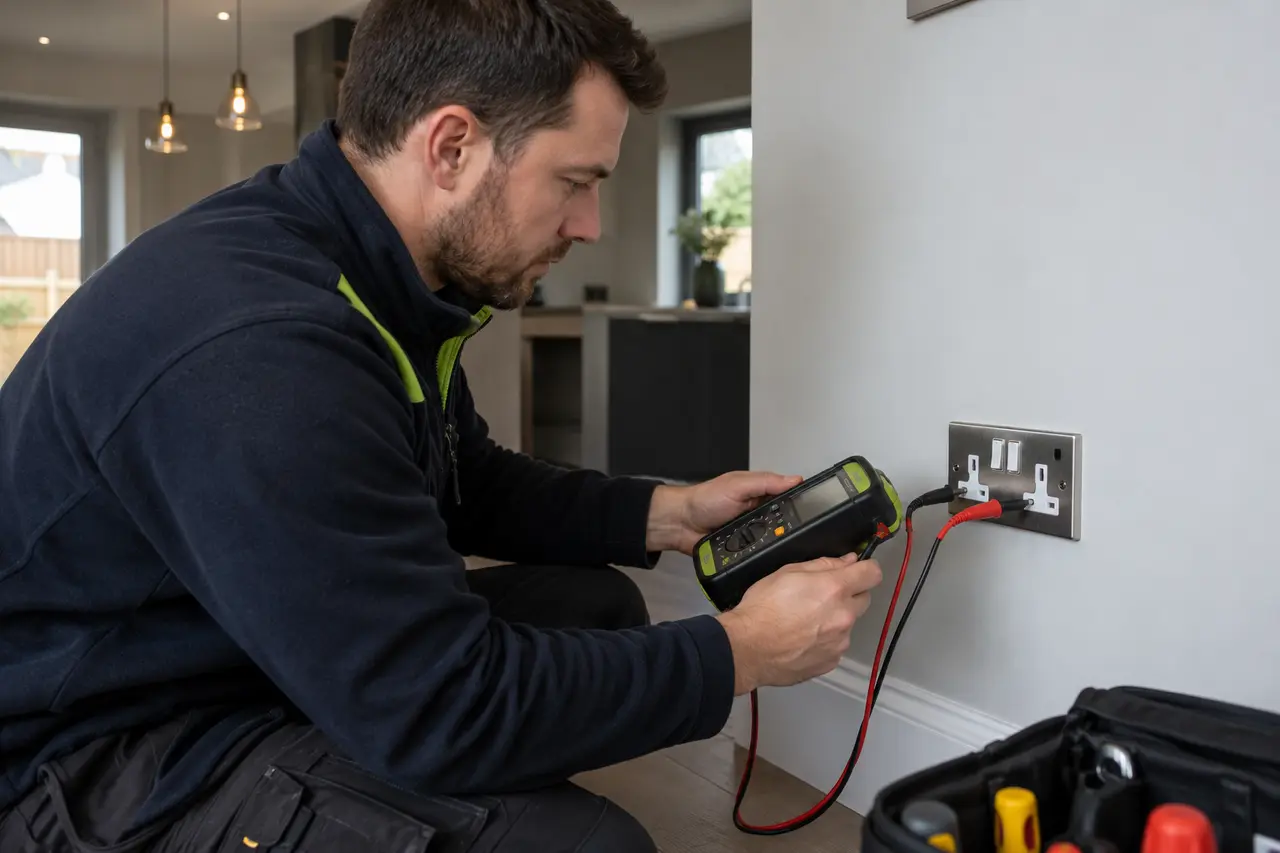
Measured fault finding for circuits, sockets, switches, lighting and cables, followed by a clearly explained repair scope.
Open service
Rewiring planned around the condition of the installation, the property layout, future demand and the certification required at completion.
Open service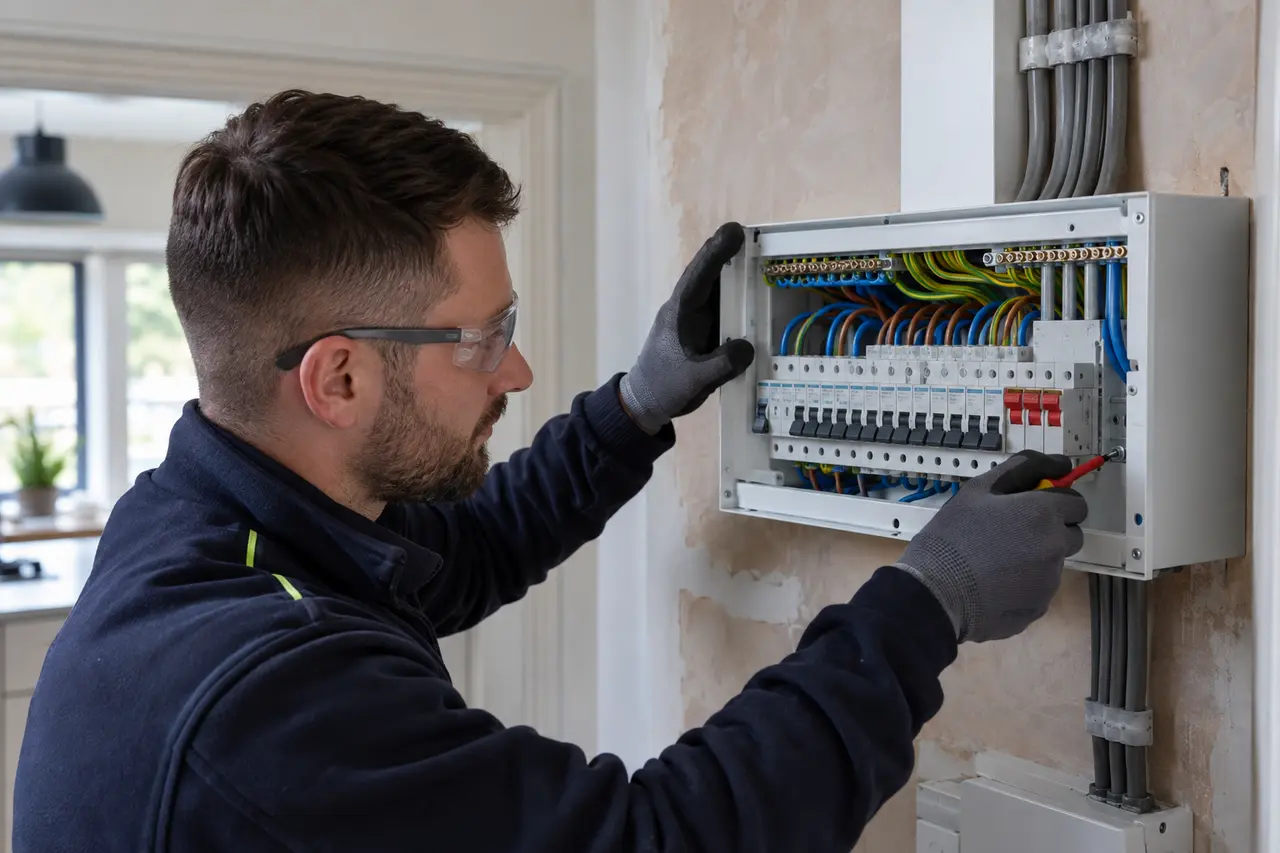
Consumer-unit checks, upgrades and repairs shaped by test results, circuit condition, protective devices and the existing installation.
Open service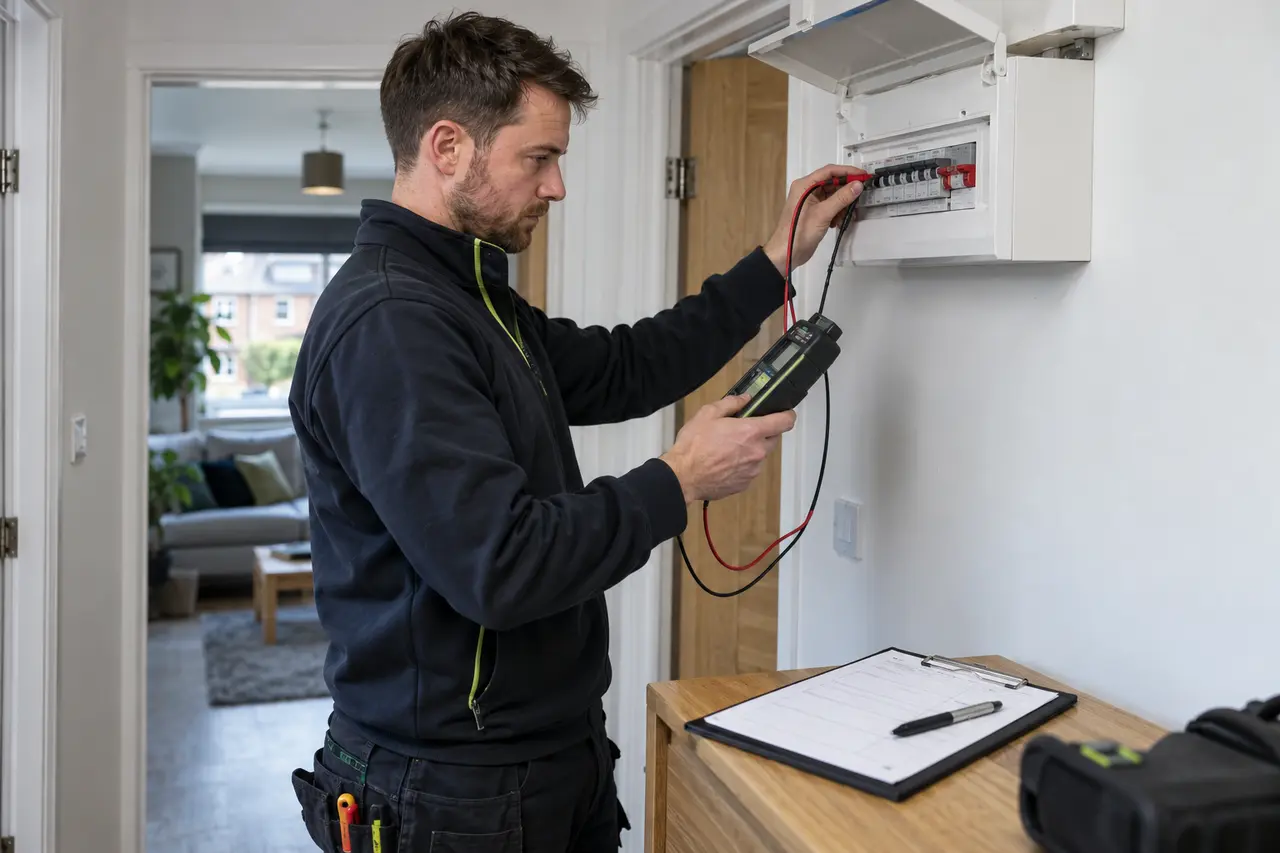
Inspection and testing that records the installation condition, identifies observations and explains what any reported codes mean.
Open service
Electrical reports, remedial work and safety systems for landlords, letting agents and shared accommodation, with records kept clear.
Open serviceDo not remove covers or touch exposed parts to collect information.
EICRs, documented remedial work, smoke alarms and coordinated access for occupied properties.
Open landlord electrical servicesTesting, planned maintenance, three-phase work and installations coordinated around site access and disruption.
Open commercial electrical servicesCore and outer-area appointments are organised from the West Bridgford contact base.
Send the postcode and a short description of the electrical problem.
The affected circuit, property type and immediate risks are checked first.
Access, testing, likely scope and appointment expectations are made clear.
Applicable checks and documentation are completed around the work undertaken.
Testing narrows down the fault before parts or wiring are replaced without evidence.
Circuit protection, earthing, cable condition and available capacity shape the right approach.
Where reports or certificates apply, the documentation should reflect the completed work and test results.
Homes, HMOs, shops and offices have different access, responsibilities and working-hour constraints.
The accessible fault, proposed work and anything outside the agreed scope stay visible.
Outer-area appointments are confirmed after the postcode and work requirements are reviewed.
Practical guides explain what to record and what not to touch.
Why Does My RCD Keep Tripping. Practical guidance from Electrician24. Discuss your property by phone or WhatsApp.
Read the guideWhat to Do When Part of Your Home Loses Power. Practical guidance from Electrician24. Discuss your property by phone or WhatsApp.
Read the guideWhat a Burning Smell from a Socket May Mean. Practical guidance from Electrician24. Discuss your property by phone or WhatsApp.
Read the guideUnderstand faults, testing, installation work and the details that help arrange the right appointment.
Electrician24 takes enquiries for electrical faults, testing and planned installation work from 22 Franklin Drive, West Bridgford, Nottingham, NG12 4ER. Call +44 7888 885791 or use WhatsApp with the property postcode and the work required. The local target area is approximately 25 miles around Nottingham, with outer-area appointments and specialist work confirmed individually before booking.
An electrical enquiry is easier to handle when it describes the problem instead of prescribing a part. Tell us which rooms, circuits or equipment are affected, what changed and whether there are visible signs of damage. Do not remove covers or expose wiring to collect information. You can begin the conversation with an ordinary description such as “the kitchen sockets stopped working” without deciding whether the fault is in a socket, an appliance or the circuit.
The website groups electrical work into twelve main service routes. These distinguish urgent assessment, repairs, rewiring, consumer units, testing, landlord work, lighting and power, outdoor installations, vehicle charging, fire and security systems, commercial work and connected-home infrastructure. A category is a way to organise an enquiry; the attending person's competence and the installation requirements still need to match the actual task.
Use the emergency-electrician service when an electrical concern needs urgent professional assessment. Explain whether there has been sparking, visible heat damage, a burning smell or a loss of power. State where it happened and whether the equipment is still in use. Do not operate a damaged fitting again to make a video or test whether the problem returns.
If there is a fire or an immediate threat to life, contact the emergency services from a safe position. An ordinary appointment cannot replace that response. Keep away from exposed parts or electrical equipment affected by water. Give the booking contact a factual description of the scene and follow appropriate safety instructions; a website cannot remotely establish that an installation is safe to touch or continue using.
Tell us whether the issue affects one accessory, a room, several circuits or the whole property. If you already know that neighbouring properties have also lost power, mention it. Do not open the consumer unit to investigate. The electrician can use the pattern you observed to discuss the appropriate next step and distinguish an installation enquiry from a possible external supply issue.
If someone has already attended, provide the findings and any instruction to keep equipment out of use. State whether that instruction has been followed. A second enquiry should not discard earlier safety information. The next person needs the sequence of events, including recent work, an appliance being connected or a protective device operating, rather than only the final symptom.
The electrical repairs and fault-finding route is for an existing installation problem. Describe when it first appeared, whether it is continuous or intermittent and any pattern you have noticed during normal use. For example, a fault may coincide with a particular appliance being used, but that observation alone does not establish where the defect lies.
Mention recent changes such as building work, a new appliance or a replaced accessory. Keep those facts separate from assumptions about causation. If an electrician has previously supplied a report, share the relevant part. A brief record of circumstances can be more useful than an unverified diagnosis copied from a discussion forum. Testing should determine the fault rather than a preselected replacement driving the investigation.
Ask whether the proposed appointment is an initial investigation, a defined repair or both. Fault finding may reveal work that needs a further decision. Clarify how access, testing time and additional repairs will be approved. A callout should not be described as a guarantee that every cause will be found and repaired within an unspecified fixed period.
Where the installation is concealed, discuss any limitations before assuming all wiring can be inspected without disturbance. If access through finishes becomes necessary, establish who approves it and whether making good is included. Retain the findings so future work begins from the same evidence. This is especially useful when an intermittent issue does not appear during every visit.
An Electrical Installation Condition Report records the findings of inspection and testing of an existing installation within the agreed scope. It is not a new-installation certificate and it is not a promise that every hidden part has been exposed. Electrical Safety First explains periodic inspection and testing, including the purpose of the resulting condition report.
For electrical testing and EICR enquiries, provide the property type, approximate extent of the installation and reason for the report. Tell us about occupied rooms, inaccessible areas and previous reports. If a landlord, insurer, purchaser or managing agent has requested documentation, share the specific request. Different purposes should not be bundled under an unclear request for “an electrical certificate”.
Before the appointment, confirm which areas and installations are included and how access will be arranged. Ask how an interruption of power will be handled. Afterwards, read the observations and discuss anything unclear with the inspector. If remedial work is recommended, distinguish the report from the separate quotation and records associated with that work.
Do not expect a satisfactory outcome simply because a report has been booked or paid for. The findings must follow the installation's assessed condition. An old report may be useful history, but it is not evidence that a later change or present fault has already been evaluated. Keep installation and alteration records alongside condition reports so the next inspection has a coherent background.
For landlord and HMO electrical work, state the premises type, occupancy arrangement and reason for the visit. Give the existing report date if available and any outstanding observations. Requirements can depend on the tenancy and installation, so use current official guidance and competent advice rather than a generic claim that one inspection interval answers every situation.
The government's electrical safety guidance for rented housing is a relevant starting point for duties in England. Keep the booking focused on the property and the records actually needed. State whether you require an inspection, remedial quotation, work following an existing report or a planned installation.
Agree who gives access, who receives the report and who can approve work. These may be different people. Residents should understand the appointment window and any expected interruption, while the authorising landlord or agent remains reachable. If shared or locked areas are included, obtain access through the appropriate building controller before the electrician attends.
For several properties, give each address its own scope, access contact and record history. A portfolio list should not conceal different installations or outstanding faults behind one generic instruction. Agree how findings will be returned and how urgent observations will be escalated to the responsible person. Clear administration supports the technical work without replacing it.
For a consumer-unit enquiry, state whether the request follows a report, an existing fault, planned building work or a desire to update the installation. Provide any available inspection findings. The condition and suitability of connected circuits need to be considered alongside the equipment itself. A new enclosure alone does not establish that every circuit has become satisfactory.
An accessible photograph of the closed consumer unit may help prepare the conversation. Do not remove its cover or touch internal components. Tell the electrician about known labels, alterations and circuits serving outbuildings or other equipment. The scope should be based on an assessment of the installation rather than a replacement chosen only because another property uses the same product.
Ask how long access is needed, how the power interruption will be managed and what testing and documentation are included. Explain if the property contains equipment that requires a specific shutdown arrangement. Do not assume that changing the consumer unit can be completed while every supply remains available. Occupants and business users need an agreed plan for the actual work.
Discuss any findings that may require associated circuit work before accepting a quotation as complete. Ask how variations are approved and how the finished circuits will be identified. Retain the supplied records and ordinary operating information at handover. Electrical Safety First's professional guides include consumer-unit replacement and condition reporting; they are guidance for competent work, not instructions to undertake the replacement yourself.
The rewiring service covers enquiries that need a planned assessment of existing wiring and proposed changes. Explain whether a report has recommended work, whether the property is being renovated and which areas are included. Age alone does not describe the present condition of every circuit, and a visible accessory replacement does not reveal the condition of concealed wiring.
Ask what evidence supports the proposed scope and whether the work is a full rewire, a defined area or an installation extension. A useful quotation identifies the circuits, accessories, locations, testing and records included. Avoid comparing a whole-property proposal with a limited-room quotation as though they were the same job. The specification should be clear enough for both you and the contractor to know what completion means.
Tell the electrician whether the property will be occupied and which rooms must remain usable. Discuss access to floors, walls, lofts and service routes without assuming that every concealed area is available. Building work, decoration and flooring should be coordinated with the electrical programme. Ask who makes good channels, openings and disturbed finishes.
Prepare a room-by-room brief covering how spaces are used and where you need power, lighting and controls. It is easier to resolve those positions before walls are finished. If the layout changes, confirm the revision with the person controlling the work. Keep the final schedule and records so future maintenance is based on what was actually installed rather than an earlier drawing.
For lighting, sockets and power, explain the equipment and activities the space must support. A home office, kitchen and workshop have different demands. Tell the electrician about fixed appliances, awkward existing positions and any planned furniture or layout changes. Adding outlets should be considered against the circuit and installation, not treated solely as a decorative accessory choice.
If an existing socket is damaged or becomes unusually hot, describe that as a fault rather than booking an unspecified cosmetic swap. Do not continue using it to test the symptom. If you want matching finishes across a room, provide the product details and ask whether they suit the task. Product appearance does not establish compatibility or the work needed behind it.
When planning lighting, discuss the room's use, ceiling access, switching positions and any dimming requirement. Tell the electrician about existing controls and the luminaires you intend to use. A lamp, driver and control need to be considered together. Do not assume a fitting advertised as dimmable will operate correctly with every existing dimmer.
For high ceilings, stairs or inaccessible fixtures, include the practical maintenance arrangement in the discussion. Ask how future access will work and which product information should be retained. Agree whether patching or decoration is included after changing positions. A lighting plan should explain everyday operation and maintenance as well as the initial installation appearance.
Use the outdoor and garden electrics route for supplies, lighting and equipment outside the main building. State the intended use, the approximate route and whether surfaces or landscaping will be disturbed. An outbuilding used occasionally for storage is a different brief from one used as a workshop or office. The expected demand and environment should be understood before a cable or accessory is selected.
Explain who owns and controls the ground along the route. Mention shared access, proposed excavation and other contractors working nearby. Do not dig or install a cable in advance simply because a product has been suggested online. The route, protection, installation method and final checks need to form one coherent design.
If you expect to add equipment later, describe the likely use without assuming that every future load can be accommodated by the first installation. Ask how capacity and accessibility will be considered. Record the agreed route and retain installation information so later garden or building work does not proceed from guesswork about concealed services.
For outdoor lighting, explain the areas you want illuminated and any concern about neighbours or intrusive glare. If controls will be timed, sensor-operated or remotely managed, clarify who needs access to change them. Everyday usability matters alongside the physical installation. Product replacement and maintenance access should remain practical once landscaping or external finishes are completed.
For EV charger installation, describe where the vehicle parks and whether you control that space. Explain the route between the electrical supply and the proposed charge point, including shared land or parking arrangements. Give any charger preference as a starting point for assessment rather than a final specification. The existing supply and installation need to be checked for the planned use.
If you rent the property or share a car park, resolve permission with the responsible party. A charger order does not itself establish permission to install on a wall, run a cable across shared space or alter the electrical installation. Discuss who coordinates any network or other approvals that apply to the actual project.
Ask what the quotation includes: equipment, cable route, associated electrical work, testing, documentation and setup. Clarify any assumptions about excavation, making good, internet access or account configuration. A headline charger price may not describe the whole installation. Keep the product warranty and the contractor's work terms separate so responsibilities are understandable.
At handover, ask for a demonstration of normal charging, any access restrictions and the information to retain for support. Decide who owns the charger account before setup, especially for a landlord or workplace installation. Do not send account passwords in a general enquiry. If several drivers will use it, explain that requirement during planning rather than after a single-user arrangement has been installed.
For the fire and security systems category, identify the equipment involved and the reason for the work. A smoke-alarm enquiry, a security-light fault and a larger premises system should not be booked under one vague instruction. State whether the job follows a report or an existing specification, and who is responsible for managing the premises.
Do not assume that replacing one visible device amounts to reviewing the suitability of a whole system. Ask which components and functions are included, what competence is needed and what records will be supplied. If the work must meet a requirement set by a managing agent, insurer or other responsible person, share that exact requirement before choosing products.
The smart-home, data and access route is useful when a project includes connected controls, data cabling or related infrastructure. Explain which devices and networks are involved, who manages them and what the installation should enable. Some failures are electrical, some involve a data connection and others concern an account or provider service. Those responsibilities should be distinguished at the enquiry stage.
Agree who supplies equipment, configures accounts and provides ongoing support. Avoid leaving a property dependent on an installer's personal login or an account owned by a former occupant. Keep private credentials out of ordinary booking messages. A practical handover should identify the system owner, the everyday controls and the appropriate contact for each type of support.
For commercial electrical work, describe the premises use, operating hours and equipment affected. Tell us whether the task is a fault, inspection, maintenance or installation. Identify the site contact, the person authorising costs and any contractor-entry process. The electrician needs to understand the working environment, not simply the business name and postcode.
Mention essential services and equipment that need a managed shutdown. Agree how staff, customers or tenants will be kept informed and who approves an interruption. Do not assume work can proceed around live operations without a specific plan. Access to distribution equipment, plant areas and relevant records should be arranged through the people responsible for the premises.
A commercial job should have a scope that identifies the equipment or installation included and the records expected. Ask how discovered defects or additional work will be reported and approved. If several contractors are involved, establish who coordinates the interfaces. An electrical installation task should not be confused with every specialist requirement of the connected machinery or business process.
At handover, retain drawings, test information or operating instructions supplied for the work. Make unresolved recommendations visible to the responsible manager. If a later maintenance team needs to work on the installation, it should have access to an accurate record rather than a series of informal messages. Good documentation supports future decisions without claiming that no fault can ever occur.
Ask who will attend and how their competence for the task can be checked. Where scheme membership or certification is relevant, verify it using the appropriate official register rather than relying on an unverified badge. Electrical Safety First provides a registered-electrician starting point. This website does not publish a made-up registration number or imply that every specialist task has identical requirements.
Give the electrician any existing report or specification that explains the job. Clarify what installation work, testing and documentation are included. A transparent discussion about competence and scope is more useful than collecting generic assurances that do not relate to the property. If the task falls outside the available competence, it needs a different arrangement rather than an inaccurate booking description.
Check whether the price is for attendance, investigation, a defined repair or a complete installation. Ask about materials, access, making good and any return visit. If additional work is found, request its purpose and cost before approval. A landlord or business manager may need to authorise it separately from the person providing access.
Keep the accepted quotation and any agreed variations with the completed-work record. Where products are supplied by you, confirm compatibility and responsibility in advance. If you need to reschedule, update the booking contact promptly and explain whether the site or equipment readiness has changed. Clear information prevents an appointment being built around assumptions that are no longer true.
If you are buying a property, gather the electrical reports and installation records the seller is authorised to provide. Explain what information you have and what assessment you need. Do not treat an estate-agent description, a recent decorative refurbishment or a new-looking socket as evidence of the condition of the entire installation. The electrician's scope should state what is to be examined and what documentation will result.
Keep the electrical assessment separate from commercial decisions about the purchase. A contractor can explain findings and a proposed work scope, but a booking message cannot resolve every question about a sale contract or responsibility between parties. Provide accurate access arrangements through the property controller. If a report already exists, share it rather than asking the next person to infer its conclusions from a short summary.
An extension, kitchen change or converted room may need electrical work at more than one stage. Explain which surfaces are open, which products have been selected and when other trades will need access. Ask the electrician what must be resolved before first fix and what remains for final connections. A programme should reflect those dependencies rather than assume all electrical tasks belong to one final visit.
If your planned use changes, update the specification before work continues. A room initially intended as storage may later become an office, and a kitchen appliance selection may change the installation requirements. Record approved alterations so the contractor is not working from an obsolete layout. Keep the finished schedule with the installation records, particularly where cables and connections become concealed by the completed building.
Tell the booking contact about appointment needs that affect access or an interruption of power. These might include a resident who needs advance notice, equipment with a specific shutdown process or a person who cannot easily use stairs. Describe the arrangement required without sending a detailed medical history. The electrician needs enough context to plan the visit, not unrelated personal information about the household.
If the person arranging the work will not be present, nominate the access contact and explain who can approve changes. Make sure both people understand the agreed scope. A neighbour holding keys is not automatically authorised to commission additional work. Give a telephone number that will be answered during the appointment so important questions do not depend on a chain of delayed messages.
Keep relevant reports, product instructions and the accepted specification available. Clear ordinary belongings from the agreed working area where you can do so safely. Do not move electrical equipment, remove covers or attempt to expose a cable route in preparation. If furniture or a locked area prevents access, tell the electrician rather than improvising a potentially unsafe solution.
If you send photographs, choose images that explain the visible installation and surrounding space. Avoid including access codes, private documents or identifiable information about other occupants. An image can help plan the visit but cannot confirm that an accessory or circuit is safe. You can always state that a label or area is inaccessible and leave the technical inspection to the attending professional.
The areas directory describes the established Nottingham service map, including local and outer-area enquiry routes. The published address is the West Bridgford base. These pages do not claim separate branches or an electrician stationed in each town. Give the exact postcode and the required work so the appointment can be confirmed, particularly near the edge of the target area.
After a visit, report any recurring concern with the work reference, date and current symptom. Explain whether another contractor has made changes since the original attendance. A follow-up needs to be considered against the actual work and installation. Keep the findings and recommendations together so the next conversation distinguishes completed work, outstanding decisions and new information.
When a property changes hands, the useful handover is a clear set of records linked to actual work. Keep the description of the installation, any relevant certificates or reports, and instructions for new equipment together. A folder full of unrelated documents is harder to use than a short index showing what was changed, where it was changed and which contractor supplied the record.
Ask about labels, ordinary user controls and any follow-up appointment before the job is closed. If a circuit remains out of use, make sure that restriction is understood by the person managing the property. Future occupants or maintenance staff should not need to guess why a particular circuit or appliance was left unavailable. Do not turn these handover notes into a claim that every part of an older installation has been renewed; the records should describe the actual scope and its stated limitations.
Yes. Explain which lights, sockets or equipment stopped working and where they are in the property. State whether the problem appeared suddenly or has happened before. You do not need to remove covers or operate unfamiliar equipment to identify a circuit. The electrician can discuss the appropriate investigation from the observations you have. A plain description is more useful than a confident but unverified diagnosis.
Do not assume that it does. An EICR is an inspection and testing report, while remedial work is a separate scope unless expressly included. Ask what the appointment covers and how observations will be explained. If work is recommended, obtain a clear description and quotation for that work, along with the records to be supplied afterwards. Paying for an inspection cannot determine its outcome in advance.
No. The condition and suitability of the connected circuits also need consideration. Explain any existing faults or inspection findings before a replacement is planned. Ask which associated checks and work are included, and how newly identified defects will be handled. The proposal should reflect the installation as a whole where relevant, rather than treating a new consumer unit as evidence that every concealed circuit is satisfactory.
Do not keep resetting it to reproduce the fault for a booking or video. Describe which device or part of the installation is affected using information safely visible from outside the equipment. Mention what was in use when the problem occurred and any previous advice. Leave diagnosis and appropriate testing to a competent electrician rather than assuming the protective device itself must be faulty.
Provide the property type, occupancy, reason for considering the work and any existing report. A room-by-room list of intended sockets, lighting and fixed equipment is useful, but it does not need to be a finished design. Explain planned building work and access constraints. The electrician can then establish the assessment and specification needed before a complete quotation or installation programme is agreed.
No. Confirm who owns or controls the parking space, wall and cable route, and obtain the necessary permission. The existing electrical installation and any applicable network arrangements also need to be considered. Provide those details before ordering equipment around an assumed location. The quotation should describe the complete installation scope and who is responsible for each approval or preparatory task.
Send the relevant report, property address, access contact and details of the person authorised to approve the work. Identify which observations the proposed job should address. Do not rely on a general message saying that a certificate has failed. The electrician needs the actual findings and scope, while residents need a clear appointment and interruption plan. Retain the resulting records alongside the original report.
No. A service page describes the task you can enquire about. Ask for the attending person's relevant competence and verify any claimed scheme membership through the appropriate register. Different installations and specialist systems may need different experience or qualifications. A website badge, product name or broad service category is not a substitute for checking the person and the actual scope before work starts.
Discuss them before purchase or booking. Supply the product information and intended use so compatibility and installation requirements can be considered. Ask whether customer-supplied products are accepted and how suitability, warranty and replacement responsibilities are handled. A decorative match alone does not establish that a fitting suits the circuit, control or environment. The quote should identify any assumptions about equipment supplied by you.
Keep a brief record of when it occurs during normal use, which equipment is affected and any visible message. Do not create an unsafe situation to reproduce it. Provide previous findings if the problem has already been investigated. An intermittent fault may need a carefully defined diagnostic approach, and a single visit cannot be promised to reproduce every symptom. Ask how findings and possible further work will be recorded.
Agree routes, accessory positions and access needs before finishes are completed. Ask whether opening and making good are included in the electrical quotation or assigned to another trade. For a larger project, identify the person controlling the programme and confirm changes in writing. This prevents an electrician and decorator working from different layouts and helps retain practical access for future maintenance.
That depends on the task and installation. Explain the equipment, facilities and operating hours that need to be considered. Agree any shutdown, access and handover plan before work starts. Do not assume an electrician can maintain every supply throughout a repair or alteration. A responsible site contact should be available to approve changes if findings affect the planned interruption or scope.
The appropriate property owner, operator or agreed user should be identified before setup. Discuss access for tenants, staff or future occupants where relevant. Avoid an arrangement that depends on a former resident's or contractor's personal account. Keep passwords out of general enquiry messages and ask for a clear handover covering everyday operation and support responsibilities for both the electrical installation and the connected service.
Retain the quotation, agreed changes, invoice and the inspection, testing or installation documentation supplied for the actual work. Keep product manuals and useful operating instructions with those records. Ask what remains outstanding if further work is recommended. An organised history helps later electricians understand the installation, but no individual document should be read as covering tasks or areas outside its stated scope.
No. The area pages describe enquiry coverage from the West Bridgford base. Give the exact postcode, premises type and work required, then confirm availability and appointment arrangements with the booking contact. Outer-area and specialist enquiries need individual confirmation. A town appearing in the directory does not establish a separate office or a particular travel time for an electrician on the day.
Send the postcode, the affected circuit or appliance and what changed before the problem started.